
Introduction
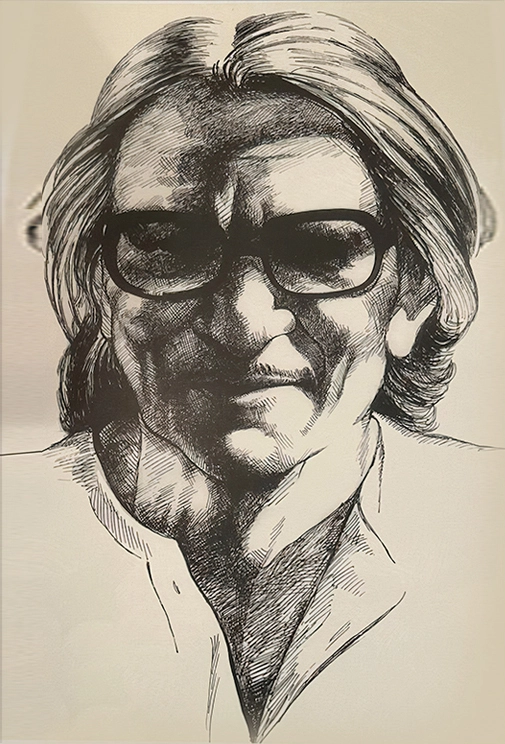
Syed Sadequain Ahmed Naqvi (1930–1987) was a visionary Pakistani painter, calligrapher,muralist, and poet whose work bridged tradition and modernity. His art integrated Islamic calligraphy with Western-inspired figuration, creating a unique visual and philosophical language. Sadequain’s lifelong commitment to public art, poetic expression, and social engagement has cemented his status as one of South Asia’s most important modern artists.
Early Life and Family Background
Born on 30 June 1930 in Amroha, British India (present-day Uttar Pradesh), Sadequain came from a distinguished family of Qur’an calligraphers. His early education at Imam-ul-Madaris nurtured his natural talent—by the age of eleven, he was reputed to have copied an entire geography textbook by hand. Following the Partition of India in 1947, his family migrated to Karachi, Pakistan, where he became associated with the Progressive Writers’ and Artists’ Movement, aligning with intellectuals who used art as a vehicle for social consciousness.
Education and Migration
In 1948, Sadequain earned a Bachelor of Arts in Art History and Geography from Agra University. He later moved to Pakistan and began his career in Karachi. His international breakthrough came in 1961 when he won the Biennale de Paris award, leading him to spend six years in Paris. During this period, he produced notable lithographic illustrations for Albert Camus’s novel The Stranger.
Artistic Style and Vision
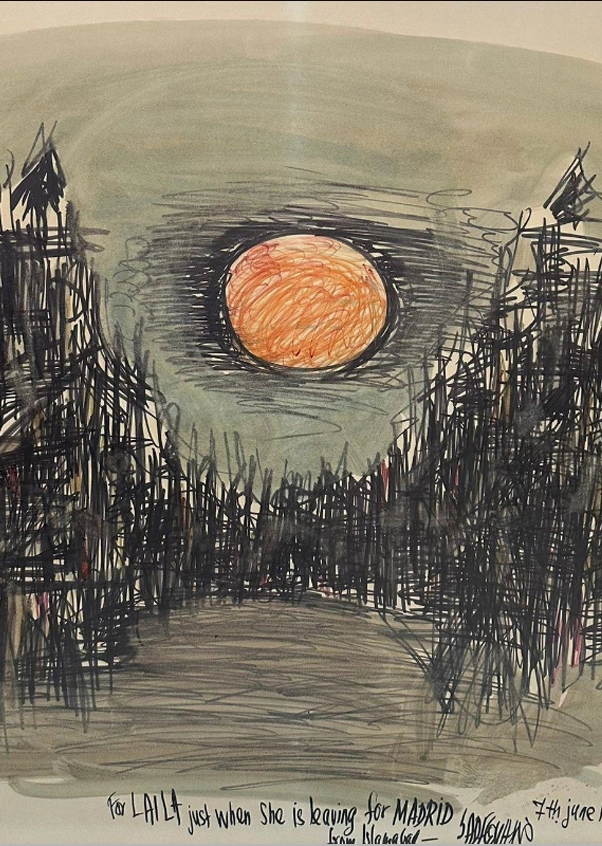
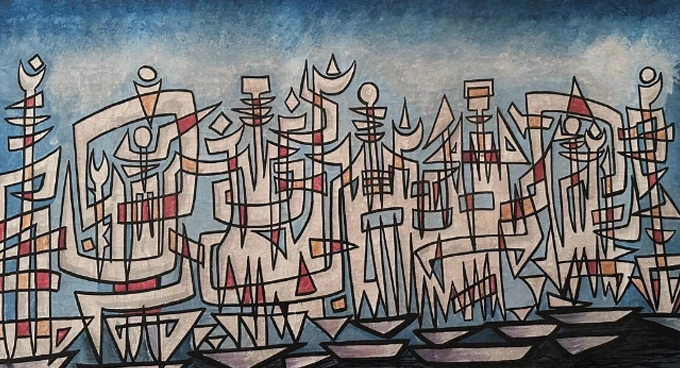
Sadequain’s visual vocabulary fused Eastern calligraphy—particularly architectonic Kufic script—with modernist figurative forms. His most iconic motif, the cactus, was inspired by the resilient desert plants he observed in Gadani, symbolising survival, strength, and defiance. His technique combined bold, confident strokes, a restrained colour palette, and expressive calligraphic motion, which evolved into his signature style known as Khat-e-Sadequain.As a central figure in Pakistan’s Hurufiyya movement, he reimagined Islamic calligraphy as a modern expressive art form, moving it beyond its decorative roots to become a medium for emotional, spiritual, and intellectual exploration.
Prolific Output
Sadequain’s artistic production is estimated at more than 15,000 works, spanning paintings,murals, calligraphy, and drawings.
Major Murals
• Treasures of Time (1961, State Bank of Pakistan, Karachi) – a vast chronicle of human intellectual history from Socrates to Einstein and Allama Iqbal.
• Quest for Knowledge (1968, Punjab University Library, Lahore) – celebrating thepursuit of learning.
• Saga of Labor (1967, Mangla Dam Power House) – honouring the dignity of workers.
• Ceiling and panels at Lahore Museum depicting human evolution and Islamic motifs.
• Frere Hall, Karachi – the monumental unfinished ceiling Arz-o-Samawat (1986–1987).
• Murals for institutions in India, including Aligarh Muslim University and Banaras Hindu University, as well as commissions in Abu Dhabi and Delhi.
Poetry
He was also a poet, composing hundreds of rubāʿiyāt in the tradition of Omar Khayyam. His published collections, such as Rubaiyyat-e-Sadequain Naqqash, combined verse with over two hundred illustrations.
Paris Period
During his years in Paris (1961–1967), Sadequain shifted towards literary illustration, most famously for Camus’s The Stranger, blending graphic precision with philosophical depth.
Notable Exhibitions
• 1966: Retrospective, St=te Bank of Pakistan Headquarters, Karachi.
• 1971–72: Calligraphy exhibition, Lahore Museum.
• 1981: International Trade Fair, New Delhi.
• 2003: The Holy Sinner: Sadequain, Mohatta Palace Museum, Karachi – featuring over 200 non-calligraphic works and accompanied by the largest monograph on the artist.
• Recent decades have seen renewed interest through exhibitions in London, New York,and Dubai.
Awards & Recognition
- Tamgha-e-Imtiaz (1960)
- Pride of Performance (1962)
- Sitara-e-Imtiaz (1980)
- Nishan-i-Imtiaz (2021, posthumous)
- Biennale de Paris Award (1961)
- Australian Cultural Award (1975)
- Gold Mercury International Award for Global Culture (1982)
Lifestyle and Personality
Sadequain described himself as a faqir—an ascetic artist devoted to spiritual and creative purpose over material wealth. He often gifted his work to public institutions and private individuals, refusing commercial payment for many large commissions. HisSadequain described himself as a faqir—an ascetic artist devoted to spiritual and creative purpose over material wealth. He often gifted his work to public institutions and private individuals, refusing commercial payment for many large commissions. His working habits were intense and disciplined; during the Frere Hall project, he reportedly painted for up to 36 hours without rest. working habits were intense and disciplined; during the Frere Hall project, he reportedly painted for up to 36 hours without rest.
Health and Adaptation
In his later years, Sadequain suffered from liver disease, yet continued working prolifically. His late style reflected a more economical use of form and colour, concentrating energy into calligraphic abstraction.
Daily Rituals and Work Ethic
• Preferred long, uninterrupted work sessions, often overnight.
• Created murals while seated on a small carpet, using steady, meditative brushwork.
• Maintained a consistent discipline of producing art daily, even during ill health
Living Between
• Karachi – primary base for major public commissions.
• Paris – 1961 to 1967 for exhibitions, awards, and illustrations.
• Lahore – key mural projects and calligraphic works.
• India and Abu Dhabi – significant mural commissions.
Change of Method and Technique
Early years
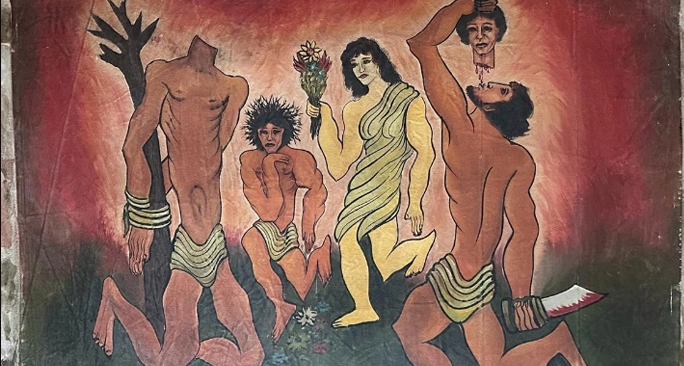
figurative compositions with strong narrative content.
Early years
figurative compositions with strong narrative content.
Early years
figurative compositions with strong narrative content.
Inspirations
His inspirations included Qur’anic scripture, human resilience, labour and industry, classical poetry, and the natural strength of the cactus.
Market Legacy
Sadequain’s work remains highly sought after, with major pieces fetching six-figure sums at international auctions. Public and institutional holdings in Pakistan, India, and abroad continue to preserve his legacy, although some murals have suffered neglect.
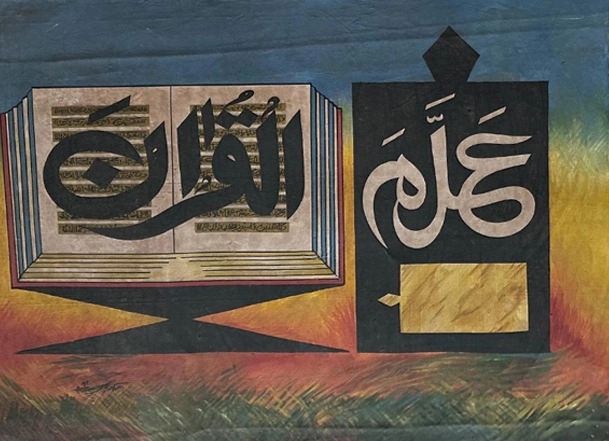
Signature Quote
“To me, cactus symbolizes the triumph of life over environment.” Syed Sadequain Ahmed Naqvi
Suggested Social Media Captions
1. “Cactus as calligraphy, labour as light – Sadequain’s art is a testament to endurance.”
2. “From Amroha to Paris to Karachi – letters became architecture in the hands of Sadequain.”
3. “Khat-e-Sadequain: when script tells the story of humanity.”
4. “Murals for the people, poetry for the soul.”
5. “A ceiling that makes you look up – Arz-o-Samawat, Frere Hall.”.
Sadequain was more than an artist; he was a cultural force who bridged faith and modernity, tradition and experimentation. His calligraphic reinventions elevated script into a dynamic art form, while his murals transformed public spaces into monumental narratives of resilience, labour, and intellect. His life’s work stands as a testament to creative integrity, making him one of the most revered figures in modern Islamic and South Asian art history.
• 1930, June 25 – Born in Amroha, U.P., India
• 1948 – Migrated to Pakistan
• 1954, August – Exhibition at Quetta
• 1955
– July: Exhibition of paintings sponsored by H.S. Suhrawardy
– October: Executed murals in Jinnah Central Hospital, Karachi
• 1957
– April: One-man exhibition at Frere Hall, Karachi (Arts Council of Pakistan)
– October: Exhibition at Quetta
– December: Studio at Karachi Airport; mural and paintings for airport lounges
• 1958, December – Studio at Gadani; mural Smuggler at Gadani
• 1959
– July: Mural for Mangla Dam Committee Room
– November: Mural Quest for Knowledge at Services Club,Karachi
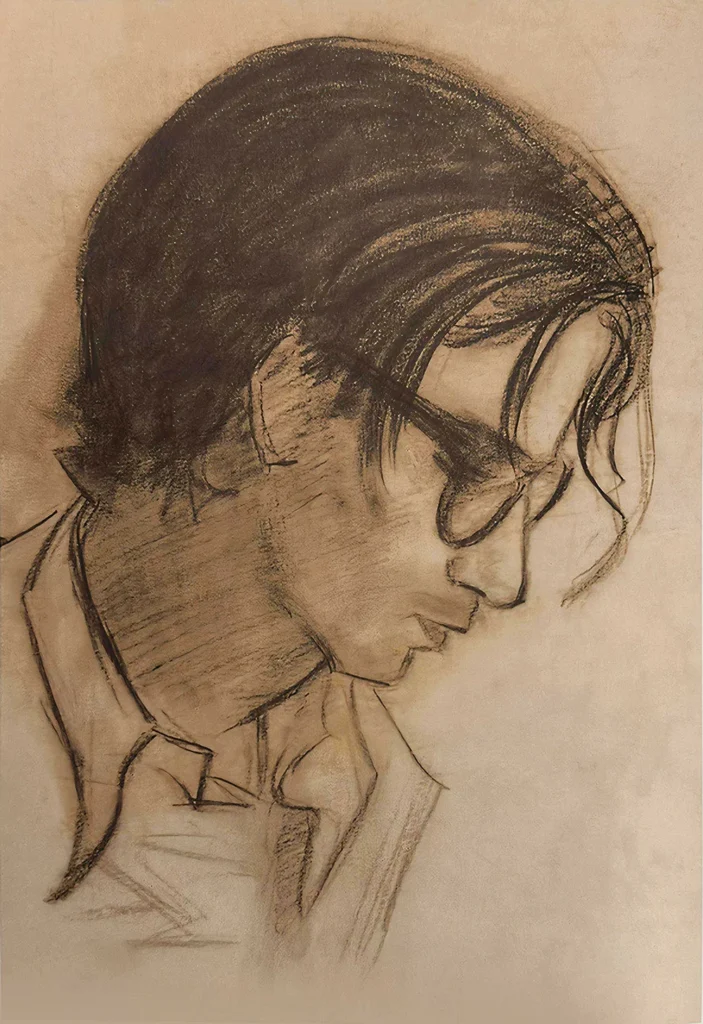
• 1960
-March: Awarded Tamgha-e-Imtiaz
– July: First Prize, All Pakistan National Exhibition of Paintings
• 1961
– Aug–Oct: Ten murals in State Bank of Pakistan (The Treasure of Time,
Laboratory of the Natural Universe)
– Sep–Oct: Participated in Biennale of Paris; awarded Laureate Biennale de Paris
• 1962
– March: President’s Medal for Pride of Performance
– June–July: Exhibition at Musée Maison du Culture, Le Havre (France)
– October: Exhibitions at Galerie Lambert, Paris, and Galerie Mona Lisa, Paris (permanent)
• 1963
– May–Aug: Exhibition at Henry Gallery, Washington, D.C.
– Oct–Nov: Exhibition at Commonwealth Institute Galleries, Londono
– December: Exhibitions at N.V.C. Gallery, London, and Museum of Modern Art, Paris
• 1964
– February: Exhibition at Galerie Presbourg, Paris
– November: Group exhibitions in multiple French museums (Le Havre, Nice,
Annecy, Dieppe, Lyon, Macon)
• 1965
– August: Exhibition at Arts Council Gallery, Karachi
– September: Exhibition at Alhamra, Lahore
– November: Mural War and Peace, Karachi
• 1966
– May: Exhibition at Hotel Intercontinental, Karachi
– July: Exhibition at State Bank, Karachi
– August: Mural Pakistan for Swiss Fair Pavilion
– September: Exhibition at Comptoir Suisse, Lausanne
– October 27: Exhibition at Automobile Club of France, Paris; lithographed Camus’s L’Etranger
– October: Mural Flight, PIA Office, Paris
• 1967
– Executed Saga of Labour at Mangla Dam
– Mural The Light of the Book at Punjab Public Library
• 1968
– January: Mural Quest for Knowledge II at Punjab University Library, Lahore
– Also murals The Confrontation and The Triumph for Punjab University
auditorium
– June: Opened painting workshop at Pakistan Institute of International Affairs,
Karachi
– Aug–Dec: Exhibitions (Barbed Wire Series, Reflexion Series, Ghalib paintings, Quranic calligraphies)
• 1969, Feb–Apr
Painted works to mark Ghalib’s death centenary; calligraphed Diwan-e-Ghalib
• 1970
– May: Published Rubaiyat-e-Sadequain-e-Naqqash
– July: Calligraphy of Surah Rahman; mural at Fleet Club, Karachi
– November: Calligraphy exhibition, State Bank of Pakistan (Islamic
Conference)
• 1972, April – Executed 260-foot Surah Yasin panels for Lahore Museum
• 1973 – Painted ceiling of Lahore Museum central gallery
• 1974 (Oct–Dec) – Solo exhibitions in Dubai, Abu Dhabi, Jeddah, Cairo, Damascus, Amman, Kuwait, Baghdad
• 1975
– October: Cultural award from Australian Government; exhibition in
Bucharest, Romania
– November: Exhibitions in Moscow (State Museum of Oriental Arts), Baku
(Union of Painters)o December: Exhibitions in Tashkent, Samarkand, Bukhara, Ankara, Tehran
• 1976
– May: Lahore exhibition drew 5,000 visitors daily; condemned by clerics as
– bscene
– June–Oct: Political uproar in Punjab Assembly
– Calligraphed Asma-e-Husna (99 names of Allah)
• 1977, November – Exhibition of Iqbal-themed paintings, Lahore Museum
• 1978 – Dedicated entirely to calligraphy
• 1979, October – Calligraphic mural for Um-ul-Naar power station, Abu Dhabi
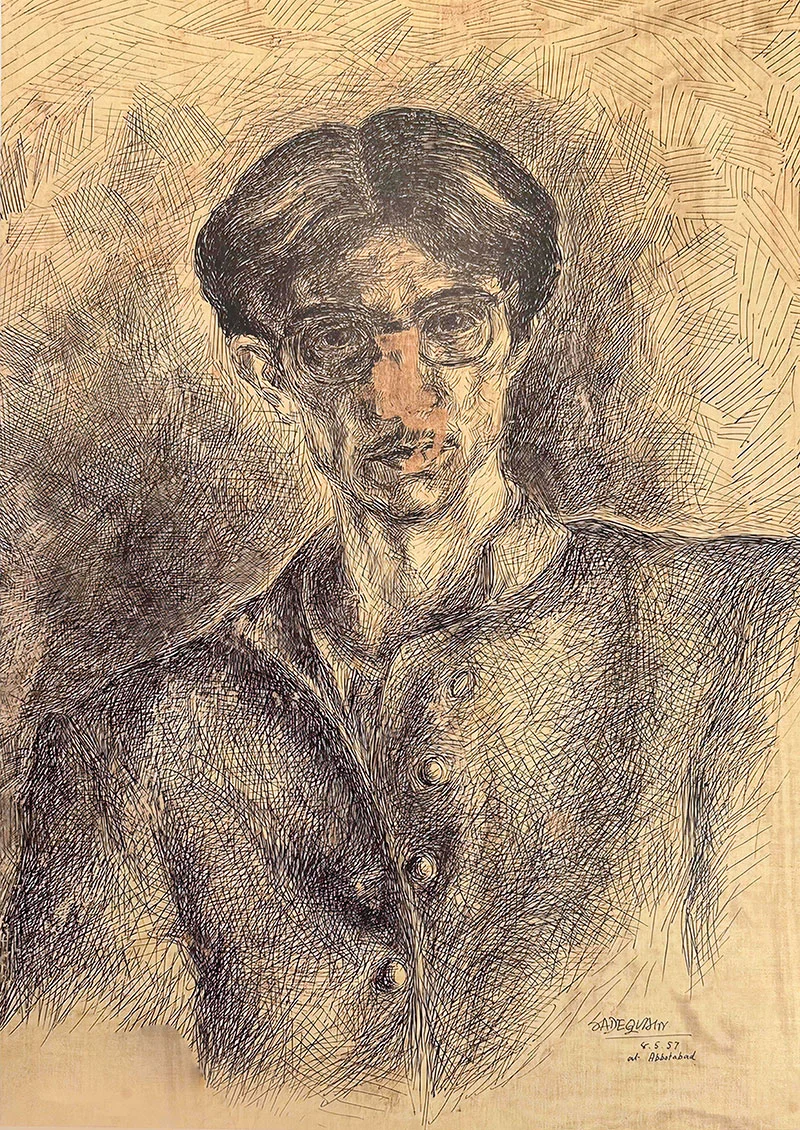
• 1980
– March: Awarded Sitara-e-Imtiaz
– April: First prize at Bahrain’s International Islamic Exhibition for calligraphy
• 1981
– August: Galerie Sadequain inaugurated, Islamabad
– November: Visited New Delhi and Amroha, India
– December: Calligraphy & painting exhibitions in New Delhi (International
Trade Fair, Lalit Kala Academy)
• 1982
– Jan–Sept: Extensive exhibitions in Aligarh, Delhi, Hyderabad, Bangalore,
Mysore, Varanasi, Lucknow
– Created murals for universities and institutes in India
– Awarded International Gold Mercury Award
• 1983 – Composed over 1,000 rubaiyats
• 1984 – Began writing autobiography
• 1985 –
– Illustrated 30 verses of Faiz Ahmed Faiz
– Exhibitions in Karachi and Kuala Lumpur
– Calligraphed Asma-e-Husna on marble panels, NIPA Karachi
• 1986 –
– Began ceiling of Frere Hall, Karachi
– Calligraphy exhibitions in Maldives
– Calligraphic mural for Shah Faisal Mosque, Islamabad
• 1987 – January: Hospitalized – February 10: Passed away; buried at Sakhi Hasan Graveyard, Karachi