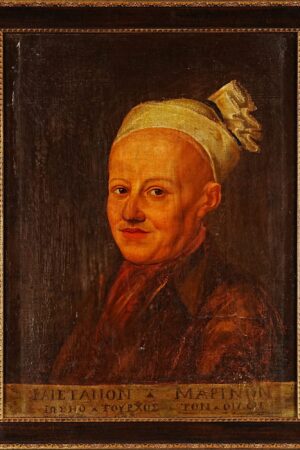
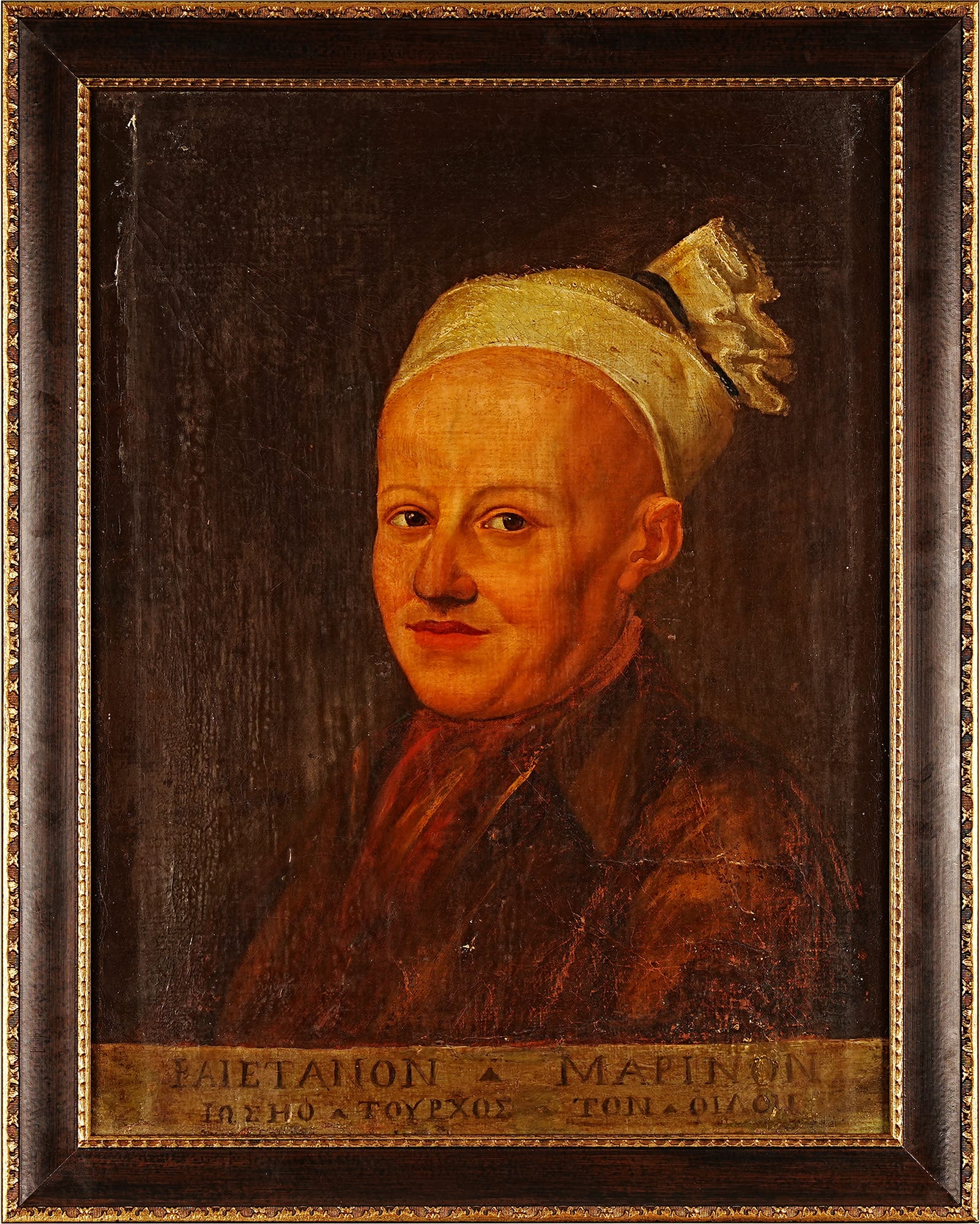
The Count Luigi Gaetano Marini (1815)

The Count Luigi Gaetano Marini (1815)

  • (1748-1825, FRENCH)
  • oil and canvas
  • 56 cm x 43 cm

Curator’s Pick
Hand selected by Noor curators

$0,00

Description

This portrait by Jacques-Louis David exudes quiet, contemplative power. Through its simplicity and direct gaze, David captures introspective dignity. The sitter, in a modest white cap and earthy tones, conveys striking psychological presence. Without embellishment, the painting reveals a thoughtful, emotional individual. David’s precise yet tender brushwork uncovers the structure of the face and emotion, offering a portrait of honesty and depth.


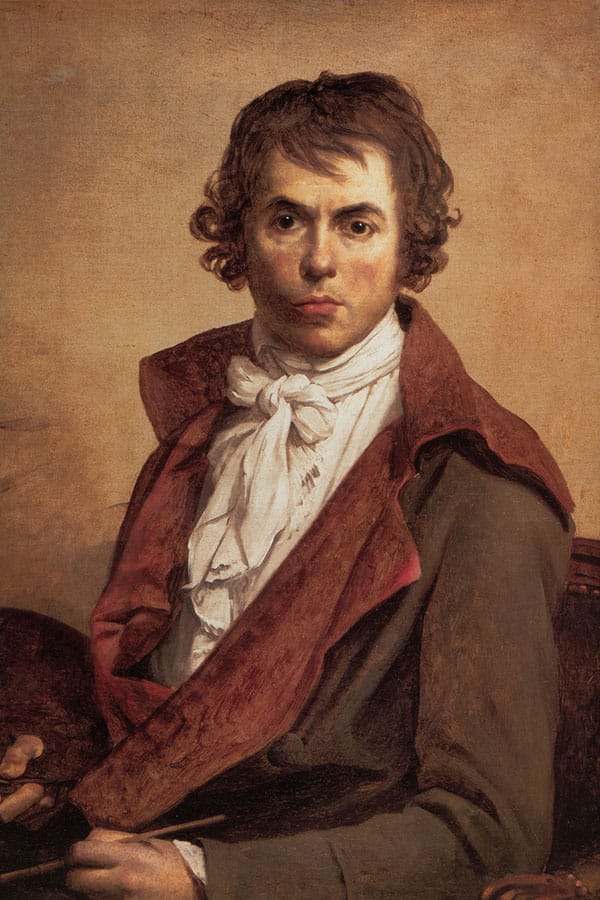
Jacques-Louis David (1748–1825) was one of the most influential painters of the late 18th and early 19th centuries, and a central figure in the Neoclassical movement. Renowned for his powerful compositions, dramatic use of light and shadow, and commitment to moral and political themes, David’s work helped define the visual language of the French Revolution and the Napoleonic era. His influence not only shaped the art of his time but also paved the way for future generations of artists in both Europe and beyond.

Early Life and Education

Born in Paris, David initially studied at the Royal Academy of Painting and Sculpture, where he trained in the Rococo style. However, his exposure to classical art during his studies in Rome profoundly shaped his artistic direction. Inspired by the ideals of ancient Greek and Roman art, David rejected the excesses of the Rococo in favor of the disciplined forms and moral clarity of classical antiquity, which would come to define Neoclassical painting.

Breakthrough and The Oath of the Horatii

David’s career took off in the 1780s with the creation of The Oath of the Horatii (1784), a work that became a symbol of the Neoclassical movement. The painting, which depicts the Horatii brothers swearing an oath to defend Rome, emphasized themes of patriotism, sacrifice, and civic duty. Its clean lines, restrained emotions, and stark compositions broke away from the previous Baroque and Rococo styles, marking a return to classical ideals of heroism and moral virtue. This work not only marked a turning point in David’s career but also aligned him with revolutionary political ideals that would shape his later works.

Association with the French Revolution

David’s association with the French Revolution was marked by his powerful depictions of its events and figures. His painting The Death of Marat (1793), for example, immortalized the revolutionary leader Jean-Paul Marat as a martyr, his body lying in a bath after being assassinated. The composition is both a tribute to Marat and a visual declaration of revolutionary ideals, blending classical composition with modern political subject matter.

Court Painter for Napoleon

Throughout the 1790s, David was deeply involved with the political and cultural changes in France. He was appointed the official court painter by Napoleon Bonaparte after the latter’s rise to power, and many of his most famous works from this period, such as Napoleon Crossing the Alps (1801) and The Coronation of Napoleon (1807), served to reinforce the grandeur and authority of the Napoleonic regime. These works featured idealized representations of Napoleon and his court, painted in the heroic, monumental style that David had developed.

Later Years and Exile

David’s later years were marked by exile. After Napoleon’s fall, David faced political and personal challenges. He lived in Brussels, where he continued to paint and teach, but he never regained the political power or prestige he had once enjoyed in France. However, his influence continued to be felt, particularly in the academic art traditions that dominated 19th-century Europe.

Legacy

David’s legacy is vast, as he helped shape the trajectory of European art during a period of dramatic political change. His Neoclassical style, with its emphasis on clarity, order, and moral virtue, influenced not only his contemporaries but also later movements, including Romanticism and Realism. His works remain powerful symbols of the ideals of the French Revolution and the Napoleonic era, making Jacques-Louis David one of the most pivotal and enduring figures in Western art history.

Additional information

Technique

oil and canvas

size

56 cm x 43 cm

Customer Reviews

No reviews yet.

Jacques-Louis David was one of the most influential painters of the late 18th and early 19th centuries. Known for his historical and political paintings, he embodied the ideals of Neoclassicism, emphasizing clarity, order, and moral virtue while drawing inspiration from classical antiquity. His works not only redefined history painting but also became powerful tools of political propaganda during the French Revolution and under Napoleon Bonaparte.

Early Life and Education

David was born on August 30, 1748, in Paris, France, into a prosperous family. His early life was marked by tragedy when his father was killed in a duel, leaving him to be raised by his uncles. Showing talent in drawing from an early age, he enrolled at the Royal Academy of Painting and Sculpture in Paris, where he studied under Joseph-Marie Vien, a Rococo painter who introduced him to classical ideals.

In 1774, David won the Prix de Rome, granting him the opportunity to study in Italy. There, he immersed himself in the art of antiquity and Renaissance masters such as Raphael and Caravaggio, profoundly shaping his emerging Neoclassical style.

Rise to Prominence

Upon returning to Paris in 1780, David became a leading figure of Neoclassicism, rejecting Rococo’s frivolity in favor of clean lines, stoicism, and moral storytelling. His early masterpieces—The Oath of the Horatii (1784) and The Lictors Bring to Brutus the Bodies of His Sons (1789)—were celebrated for their dramatic compositions and moral gravity, securing his reputation as France’s foremost history painter.

Revolutionary Artist

With the outbreak of the French Revolution in 1789, David aligned himself with the radical Jacobins, including Maximilien Robespierre. He became the “painter of the Revolution,” using his art for propaganda. His iconic work, The Death of Marat (1793), portrayed the murdered revolutionary leader as a martyr, blending stark realism with emotional impact.

David’s political engagement extended beyond painting. He designed revolutionary festivals, staged events, and actively participated in politics as a member of the National Convention, even voting for the execution of King Louis XVI. His deep involvement brought both fame and imprisonment—he was jailed after the fall of Robespierre in 1794, during which he continued to paint portraits of fellow prisoners.

Service to Napoleon

After his release, David shifted his allegiance to Napoleon Bonaparte. Appointed First Painter to the Emperor, he produced some of the most iconic images of the Napoleonic era, including Napoleon Crossing the Alps (1801) and The Coronation of Napoleon (1807). These monumental works combined Neoclassical precision with dramatic grandeur, immortalizing Napoleon’s reign and cementing David’s role as the official artist of the empire.

Exile and Later Years

Following Napoleon’s fall in 1815, David was exiled to Brussels, Belgium, where he continued to paint, though on a smaller scale. His later works, such as Mars Being Disarmed by Venus and the Three Graces (1824), showed a softer and more romantic sensibility, reflecting the changing artistic climate of the time.

David died in Brussels on December 29, 1825. Although his funeral was modest, his legacy loomed large over the art world.

Legacy

Jacques-Louis David remains a towering figure in Western art history. He transformed history painting into a vehicle of moral and political expression, setting new standards in clarity, form, and symbolism. His students—including Jean-Auguste-Dominique Ingres and Antoine-Jean Gros—carried forward his principles, bridging Neoclassicism and Romanticism.

Today, David’s masterpieces are housed in major institutions such as the Louvre and Versailles, continuing to testify to the power of art in shaping both historical memory and cultural identity. From revolutionary Paris to imperial courts and exile, David’s life and work reflect the turbulent transformations of France, marked by ambition, artistry, and unflinching dedication to both art and politics.

Related Works

The Count Luigi Gaetano Marini (1815)
$0,00