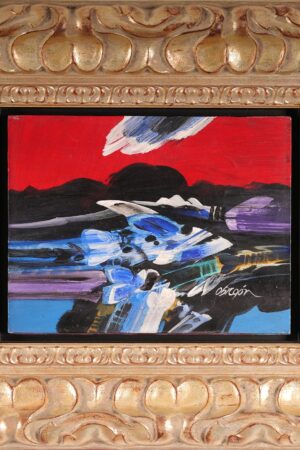
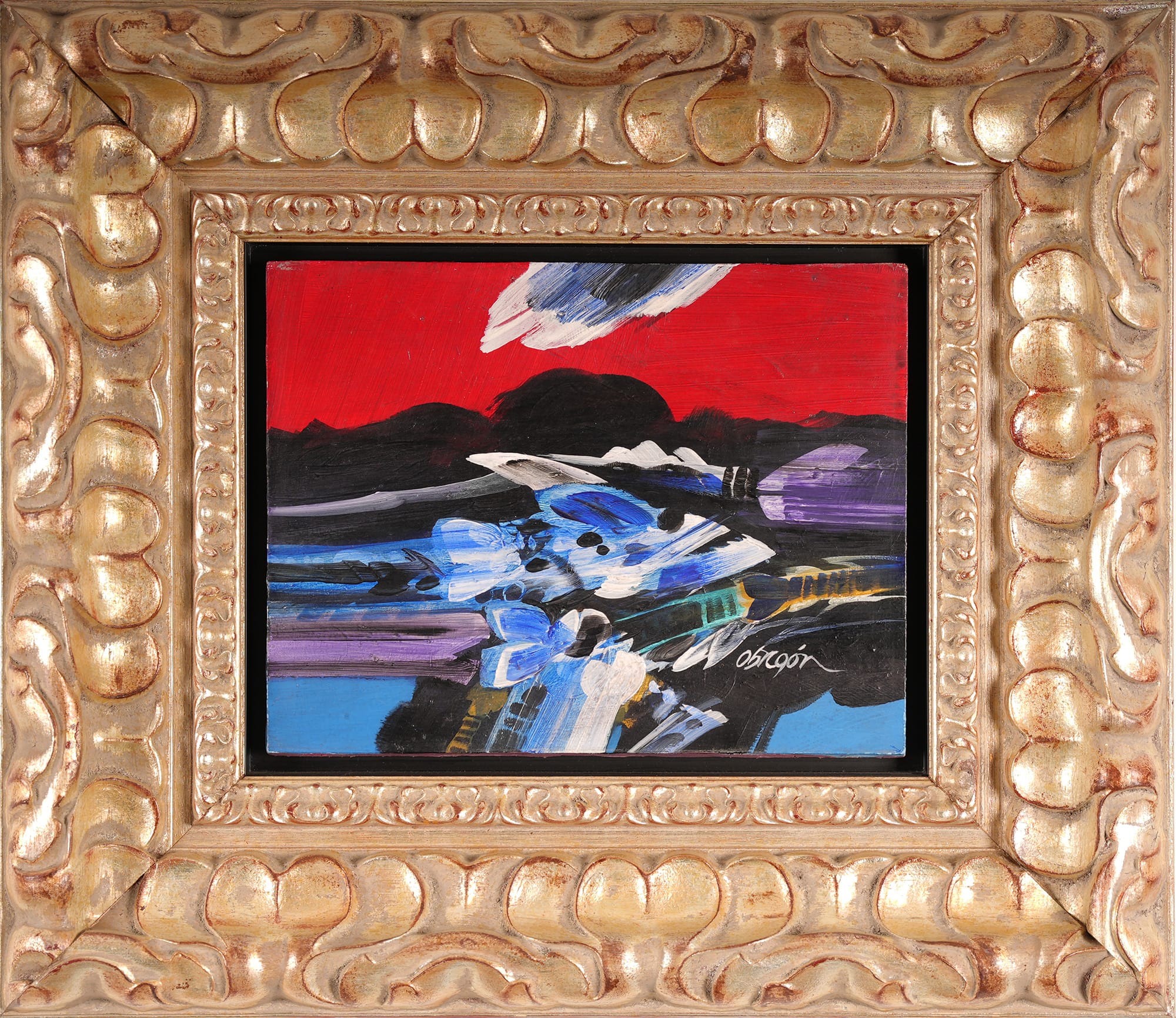
Barracuda with red sky (1988)

Barracuda with red sky (1988)

  • (1920-1992, Colombian)
  • acrylie on wood
  • 34 cm x 26 cm
14165

Curator’s Pick
Hand selected by Noor curators

$0,00

Description

Attributed to Alejandro Obregón, this striking piece blends abstraction and expressionism, featuring a barracuda against a fiery red sky. Obregón’s expressive brushstrokes and dynamic contrasts create powerful visual impact. The fish’s sharp contours evoke nature’s force and resilience, exemplifying his symbolic and emotional approach.


Alejandro Obregón was born in Barranquilla, Colombia, in 1920. He grew up in a culturally rich environment that shaped his artistic sensibilities. Initially, he studied architecture at the Universidad de Bogotá, which gave him a foundation in design, composition, and spatial understanding before fully committing to painting.

Studies in Europe

In the 1940s, Obregón moved to Paris to pursue painting. He studied at the École des Beaux-Arts and was exposed to the European avant-garde—particularly Expressionism, Cubism, and Surrealism. He drew inspiration from masters like Pablo Picasso, Georges Braque, and Henri Matisse, yet developed a distinctive style that fused European modernist techniques with Colombian cultural themes.

Artistic Style and Influence

Obregón became a leading figure in Colombian modernism. His style combined:

  • Abstract Expressionism

  • Dynamic brushwork

  • Vibrant colors

  • Exaggerated forms

His paintings often juxtaposed natural forms with abstract elements, conveying intense emotion and reflecting his inner responses rather than striving for photographic realism.

Themes and Motifs
  • Colombian Identity:
    Early works, such as La Madre (1951), incorporated symbols of native and Afro-Colombian heritage, folklore, and political events.

  • The Jaguar:
    One of his most iconic motifs, symbolizing strength, power, and primal energy, as seen in La Muerte del Jaguar (1960).

  • Later Works:
    Paintings like El Hombre y el Mar (1983) show a more abstract and expressive approach, exploring themes of the human condition, war, and modern societal turmoil.

Global Recognition

Obregón exhibited his works internationally, including in New York, Paris, and Caracas, bringing Colombian modern art to global attention. His innovative fusion of European modernism and Latin American cultural identity helped establish a new artistic identity for the region.

Legacy

Alejandro Obregón remains a pivotal figure in Latin American art. His expressive power, mastery of color, and cultural significance continue to inspire artists worldwide. His work transcends geographical and political boundaries, capturing both the complexity of Colombia and the emotional depth of human experience.
Additional information

Technique

acrylie on wood

size

34 cm x 26 cm

Customer Reviews

No reviews yet.

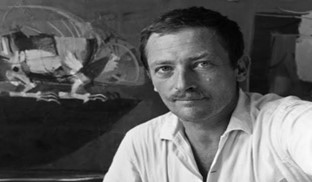
Alejandro Obregón (1920–1992) was one of Colombia’s most celebrated modern painters, known for merging Abstract Expressionism with national identity. Born on June 4, 1920, in Barcelona to a Colombian father and a Catalan mother, he grew up between Spain and Colombia, a bicultural upbringing that shaped his vision. In 1939, with the outbreak of the Spanish Civil War, his family returned to Colombia. Obregón pursued studies in Boston but soon discovered that his true path lay in painting. By the 1940s, he was already experimenting with Cubism and Surrealism, influenced by European modernists such as Pablo Picasso and Georges Braque. His first solo exhibition in Barranquilla introduced him as a bold new voice in Colombian art, with works distinguished by vivid colors, energetic brushwork, and a fascination with abstraction.

Throughout the 1950s, his style developed into a personal synthesis of abstraction and figuration, often depicting animals such as bulls, birds, and marine creatures as symbols of struggle, violence, and the forces of nature. His international breakthrough came in 1955 when he represented Colombia at the São Paulo Biennial, earning critical acclaim for his originality. A pivotal moment in his career arrived with the creation of the “Violencia” series in the late 1950s, a searing artistic response to Colombia’s brutal civil conflict. These works, defined by their powerful use of color and form, captured the anguish of a nation and established Obregón as an artist who combined aesthetic innovation with social commentary. In 1962, he received Colombia’s National Prize for Painting, solidifying his place as a leading figure in Latin American art.

During the 1970s, Obregón began working on larger canvases and monumental murals in Bogotá and Barranquilla, bringing his art into public spaces. One of his most enduring symbols was the condor, a bird representing freedom and resilience in Andean culture, which became a recurring motif in his paintings. Works such as El Cóndor and Vuelo del Cóndor embody his fusion of national identity with expressive modernism. Despite challenges in his personal and political life, he continued to explore new approaches to color and form. His marriages to poet Sonia Osorio and later to painter Freda Sargent were both sources of creative dialogue and inspiration.

In 1985, Obregón was awarded the Order of San Carlos, one of Colombia’s highest honors, in recognition of his role as a cultural ambassador. Even in his later years, he remained active as an artist and mentor, inspiring younger generations. He died on April 1, 1992, in Cartagena, leaving behind a powerful legacy. Today his works are housed in major collections such as the Museo Nacional de Colombia and the Museo de Arte Moderno de Bogotá. Obregón is remembered as a bold visionary whose art reflected both the turmoil and the vitality of Colombia, merging modernist techniques with the spirit of his homeland.

Related Works

Barracuda with red sky (1988)
$0,00