
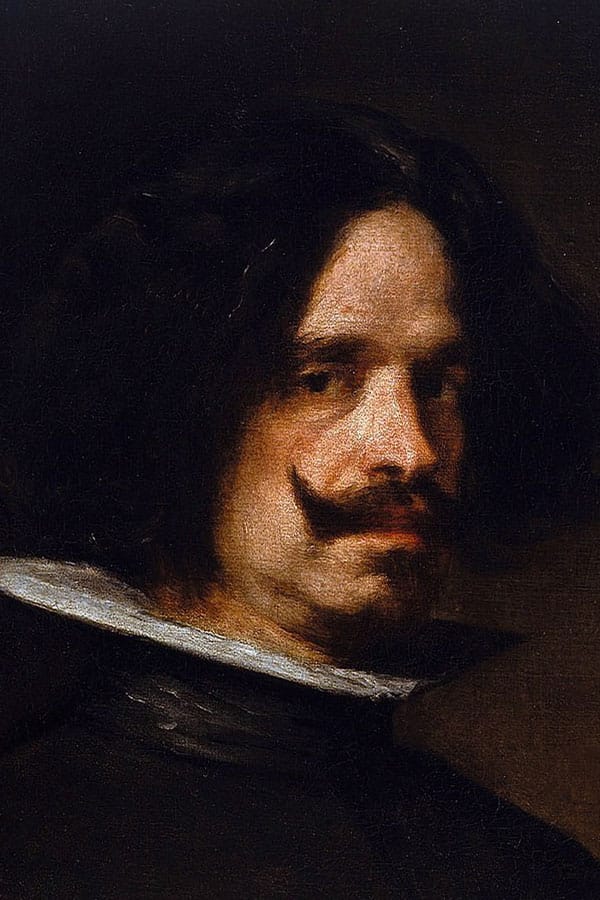
Diego Rodríguez de Silva y Velázquez was born on June 6, 1599, in Seville, Spain, into a modest noble family. Showing exceptional talent from a young age, he became an apprentice at 11 to Francisco Pacheco, a painter and theorist, where he learned both artistic technique and humanist principles. In 1617, he joined the painters’ guild of Seville, marking the start of his professional career. His early works included religious scenes, still lifes, and everyday life, reflecting a naturalistic style influenced by Caravaggio.
Early Career and Marriage
In 1618, Velázquez married Juana Pacheco, his mentor’s daughter, and they had two daughters. By the early 1620s, he gained recognition with works like The Water Seller of Seville, demonstrating skill in realism and attention to detail.
Court Painter and Italian Influence
In 1623, Velázquez was summoned to Madrid to paint King Philip IV, who soon appointed him court painter. He created official portraits of the royal family and nobility, combining elegance with psychological depth. Between 1629 and 1631, Velázquez traveled to Italy, studying Renaissance masters such as Titian, Raphael, and Michelangelo, which enriched his understanding of composition, color, and form. Returning to Spain, his style matured with dynamic compositions and a richer palette, producing masterpieces like The Surrender of Breda (1634–35).
Portraits and Later Works
Throughout the 1640s, Velázquez painted portraits of the king’s children, dwarfs, and jesters, capturing both humanity and character. In 1649, he returned to Italy as a royal envoy, creating iconic works like Portrait of Innocent X (1650), celebrated for its realism and psychological intensity. Upon returning to Spain in 1651, he was appointed Aposentador Mayor del Palacio, overseeing royal palace decoration and ceremonies.
Las Meninas and Masterpieces
In 1656, Velázquez completed Las Meninas, his most famous work, a complex composition blending reality and illusion, featuring the royal family, attendants, and the artist himself. His loose brushwork, mastery of naturalistic detail, and ability to convey dignity and personality influenced future generations, including Manet and the Impressionists.
Personal Life and Legacy
Velázquez also painted mythological and religious subjects, such as The Rokeby Venus, one of the rare Spanish nudes of the period. He died on August 6, 1660, in Madrid. His works remain celebrated for technical brilliance, humanity, and enduring influence on Western art, with many masterpieces housed in the Prado Museum in Madrid.
