

Description
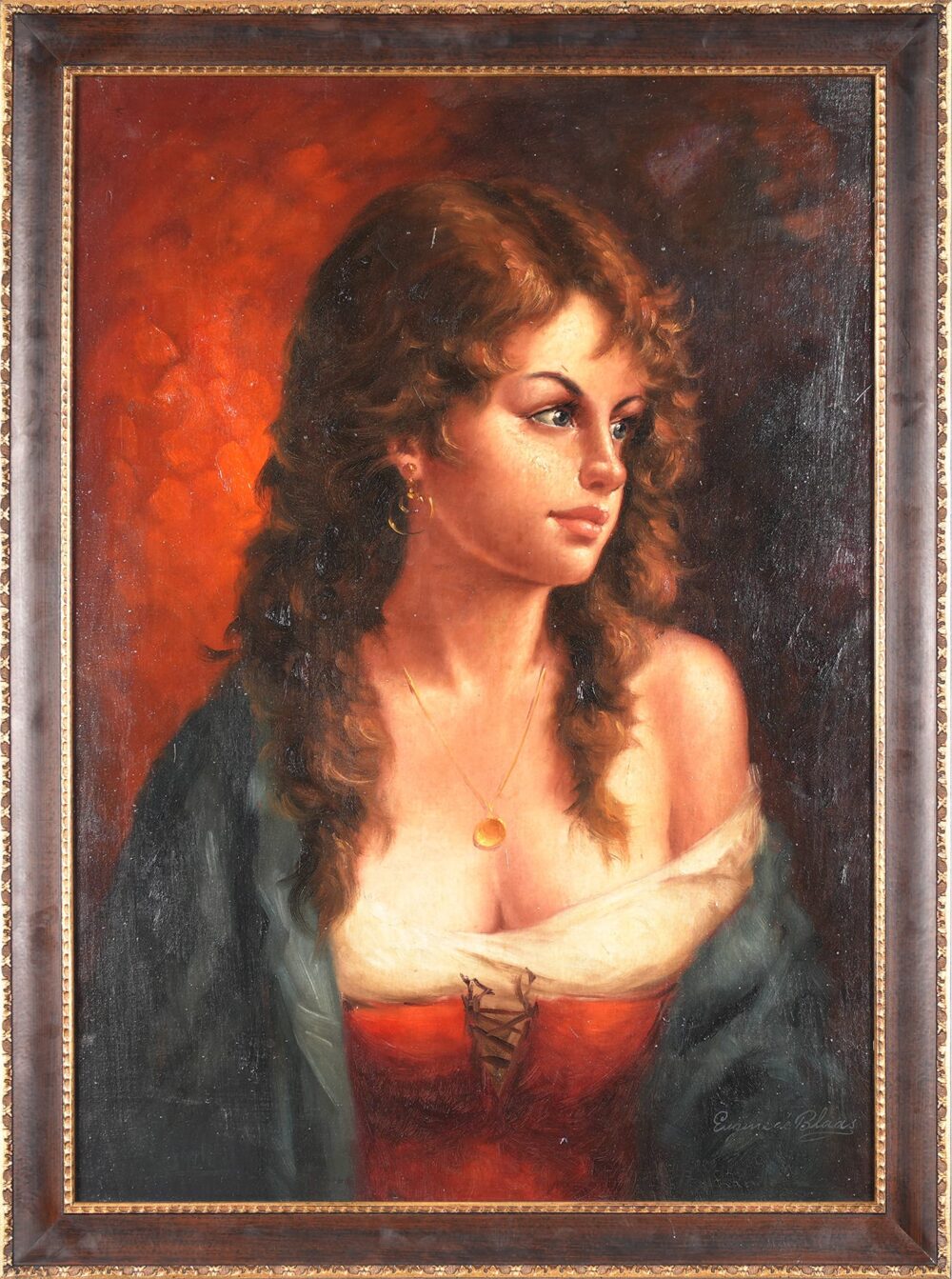
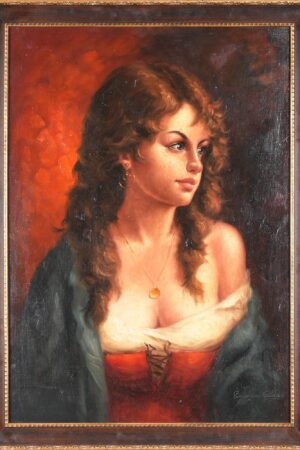
This artwork, attributed to Eugene de Blaas, presents a refined portrait of aristocratic elegance in late 19th-century Venetian society. The noblewoman, adorned in exquisite attire, exudes sophistication and status. De Blaas’ brushwork captures intricate textures, from delicate lace to the soft glow of her skin. The rich color palette, combined with a masterful play of light and shadow, adds depth and intimacy, showcasing De Blaas’ skill in capturing both beauty and character in a timeless composition.
Eugène de Blaas (1843–1932) was an Austrian-Italian painter renowned for his vibrant and detailed depictions of Venetian life. A master of academic realism, he specialized in capturing the charm, beauty, and social interactions of everyday people, particularly Venetian women in colorful traditional attire. His work, characterized by meticulous attention to detail, luminous colors, and a romanticized view of daily life, continues to captivate audiences with its elegance and warmth.
Early Life and Training
Born in Albano, Italy, to Austrian parents, de Blaas grew up in an artistic environment. His father, Karl de Blaas, was a well-respected academic painter and professor, who guided Eugène’s artistic education. He studied at the Academy of Fine Arts in Venice, where he developed a highly refined technique influenced by both Italian and Austrian academic traditions. Venice, with its unique atmosphere and rich artistic history, became the central theme of his work, inspiring the picturesque scenes that would define his career.
Focus on Venetian Life
De Blaas’s paintings often focused on Venetian women, capturing their beauty, grace, and emotions with remarkable realism. Works such as The Flirtation, A Young Beauty, and The Water Carrier showcase his ability to depict delicate fabrics, intricate lace, and the subtle play of light on skin with exquisite precision. His figures, though idealized, radiate personality and liveliness, engaging the viewer with their expressive gazes and dynamic postures.
Everyday Scenes over Historical Subjects
Unlike many of his contemporaries, who painted grand historical or mythological subjects, de Blaas preferred scenes of everyday life. He often portrayed young women engaged in conversation, laughter, or moments of reflection, evoking a sense of romance and nostalgia. His works provided a glimpse into 19th-century Venetian society, highlighting the customs, fashion, and social interactions of the time.
Mastery of Color and Detail
His use of color was particularly striking. He employed a warm and vibrant palette, enhancing the richness of Venetian architecture, clothing, and landscapes. His ability to balance light and shadow added depth and realism to his compositions, making his figures appear almost lifelike. His attention to detail extended beyond the human form to the textures of stone, wood, and water, creating immersive and visually stunning scenes.
Career and Recognition
Throughout his career, de Blaas exhibited widely, gaining international recognition for his skill and subject matter. His work was highly sought after, particularly in Britain and the United States, where collectors admired his refined technique and idealized portrayals of Venetian life. Despite the rise of modernist movements in the late 19th and early 20th centuries, he remained committed to academic realism, preserving a classical approach to painting.
Legacy
His legacy endures as a painter of beauty and elegance, celebrated for his ability to capture the charm and spirit of Venice. His works continue to be admired for their technical brilliance, emotional warmth, and timeless appeal. By immortalizing the grace of everyday moments, Eugène de Blaas left behind a body of work that remains a testament to the enduring power of academic realism in art.




Furion –
Great value for the price
Furion –
Love this bottle!