
Description
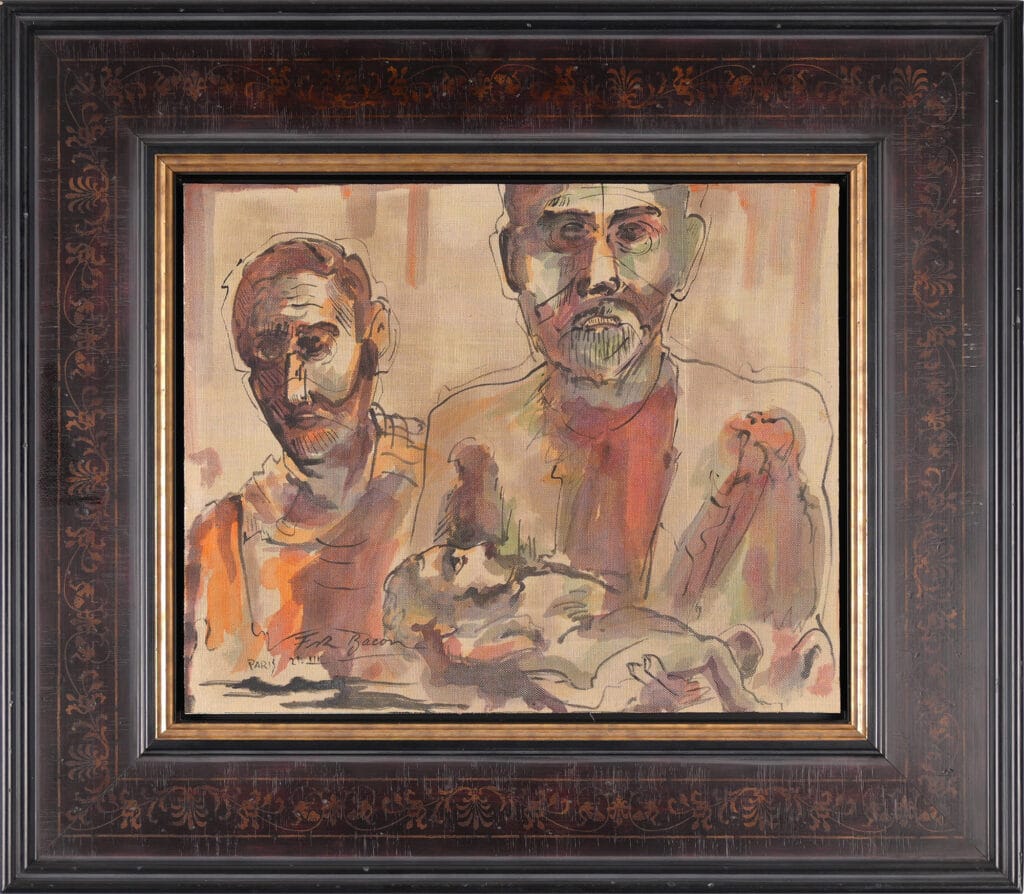
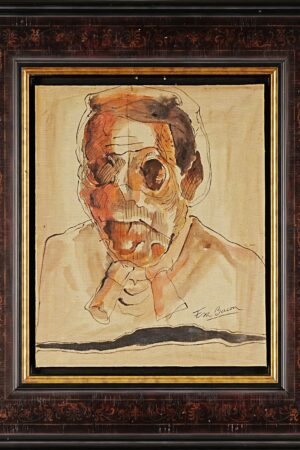
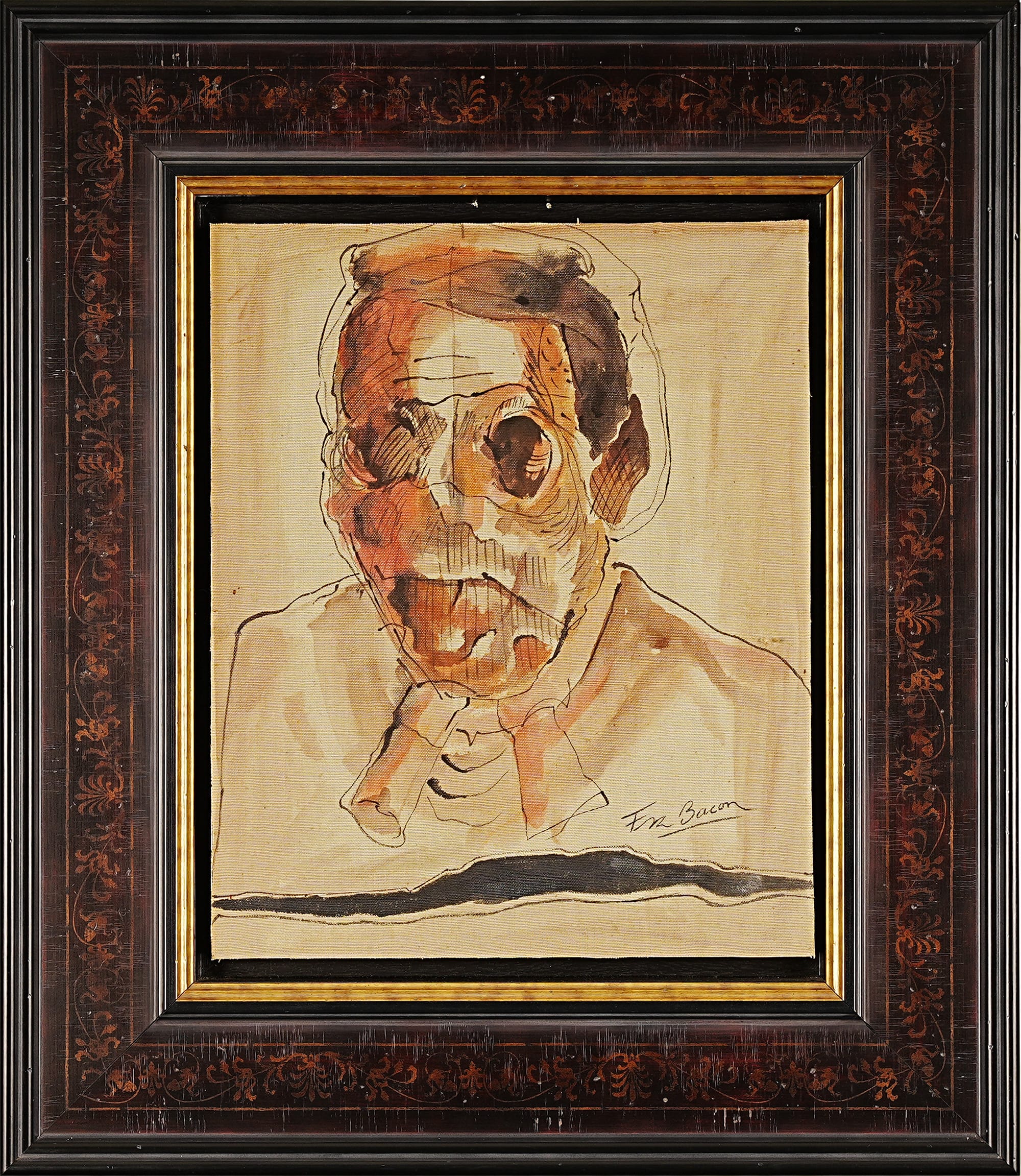
This artwork, attributed to Francis Bacon, features a disquieting portrait where the human face is reshaped into a psychological landscape. Distortion blurs the line between physical and emotional. Bacon’s fluid brushstrokes mix deep shadows with raw hues, evoking anguish and motion. The mixed media or canvas adds a ghostly, fleeting quality, reinforcing identity dissolution. It’s an intense reflection on the fragility of existence.
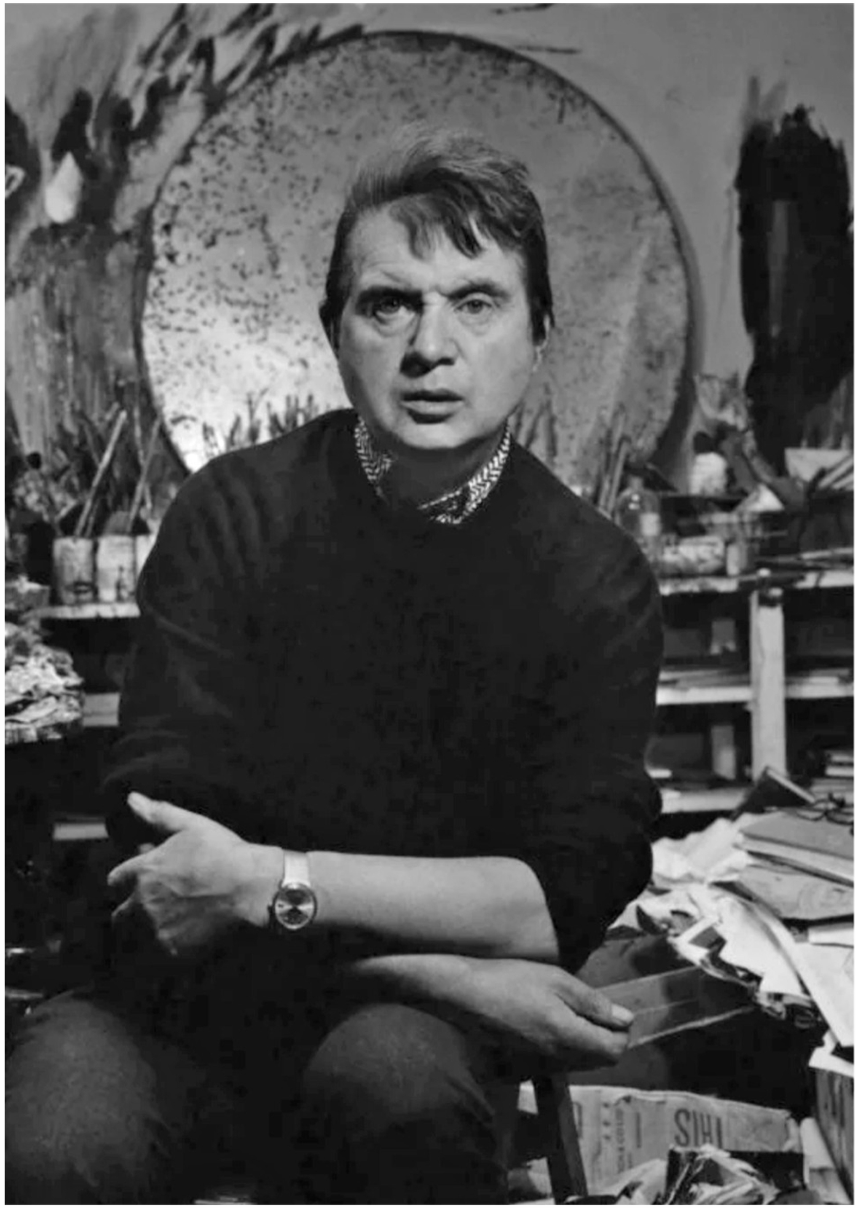
Francis Bacon, born in Dublin, Ireland, to English parents, became one of the most influential and provocative artists of the 20th century. His childhood was turbulent, marked by conflict with his strict father and struggles with identity. In the 1920s, he moved to London, where exposure to the works of Pablo Picasso and the Surrealists profoundly shaped his artistic development. Largely self-taught, Bacon experimented with various mediums before fully committing to painting in the 1940s.
Breakthrough and Signature Style
Bacon’s breakthrough came with Three Studies for Figures at the Base of a Crucifixion (1944), a haunting triptych that introduced his signature style: contorted, screaming figures trapped in bleak, undefined spaces. Created in the aftermath of World War II, the work captured the psychological trauma and existential anxiety of the era. Later works, including Head VI and Study after Velázquez’s Portrait of Pope Innocent X, continued this exploration of human suffering, transforming classical subjects into nightmarish visions.
Techniques and Artistic Approach
Bacon’s art is characterized by distortion and blurring to convey movement and emotion. His figures often appear twisted, disfigured, or dissolving into their surroundings, emphasizing the instability and fragility of human existence. Portraits of close friends and lovers, such as George Dyer and Lucian Freud, reveal psychological depth and raw intensity. Instead of traditional likeness, Bacon sought to expose inner turmoil through expressive deformation.
His compositions often occupy geometric structures, creating a sense of confinement and claustrophobia. Bold, unnatural colors—deep reds, electric blues, and stark blacks—heighten emotional intensity. Bacon drew inspiration from diverse sources, including medical textbooks, film stills, and photography, integrating these influences into a unique visual language.
Critical Success and Legacy
Despite his dark themes, Bacon achieved significant commercial and critical success. He exhibited internationally, and his paintings became highly sought-after. The triptych Three Studies of Lucian Freud (1969) became one of the most expensive artworks ever sold at auction, confirming his status as a modern master.
His later works maintained the intensity of earlier paintings but emphasized empty space and isolation. Paintings created shortly before his death in 1992 reflect introspection and mortality, yet he continued pushing the boundaries of figurative painting until the end of his life.
Enduring Influence
Francis Bacon remains one of the most powerful voices in contemporary art. By confronting the raw, often brutal aspects of human existence, he redefined modern portraiture. His work continues to provoke, disturb, and inspire, offering a profound exploration of the complex and unsettling nature of the human experience.