
Description
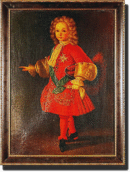
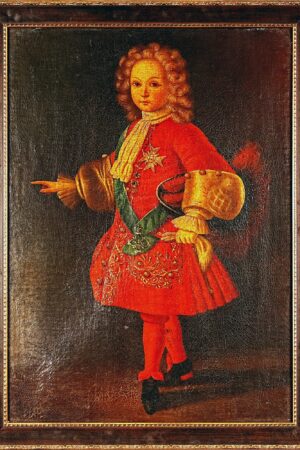
This luminous portrait by Diego Velázquez showcases his rare talent for portraying nobility with both majesty and tenderness. The young aristocrat, dressed in crimson and gold, embodies quiet confidence and youthful poise. Subtle gestures, soft modeling, and rich textures emerge under delicate light. More than a mere court painting, it captures a timeless moment where elegance, emotion, and soul converge.
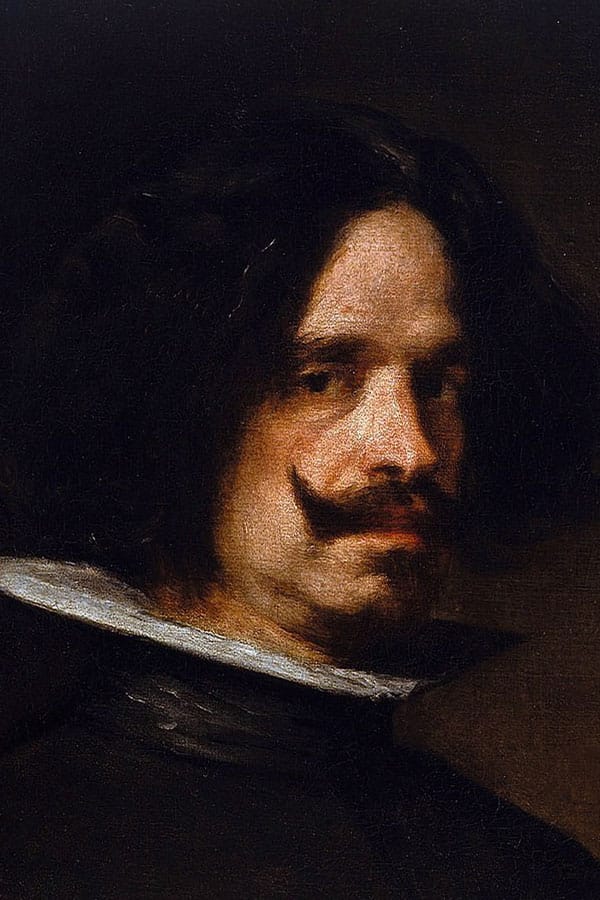
Diego Velázquez (1599–1660) was one of the greatest painters of the Spanish Golden Age and a central figure in the development of Western art. Renowned for his masterful use of light, perspective, and realism, he revolutionized portraiture and historical painting, influencing generations of artists from Francisco Goya to Pablo Picasso. Velázquez’s ability to capture human presence with psychological depth and technical brilliance made him one of history’s most revered painters.
Early Life and Training
Born in Seville, Spain, Velázquez displayed exceptional artistic talent from an early age. He trained under Francisco Pacheco, a respected painter and theorist, who introduced him to naturalism and Italian Renaissance traditions. However, Velázquez quickly surpassed his mentor, developing a more realistic and direct approach. Early works, such as Old Woman Frying Eggs and The Water Seller of Seville, demonstrate his mastery of chiaroscuro and his ability to render textures, light, and human expression with striking realism.
Career at the Spanish Court
Velázquez’s career took a pivotal turn in 1623 when he moved to Madrid and became the court painter for King Philip IV. This role gave him access to the royal family and Spanish elite, resulting in some of the Baroque period’s most remarkable portraits. Works like Philip IV in Brown and Silver showcase his skill in blending regal dignity with psychological insight, portraying his subjects with unprecedented realism and presence.
Innovation in Composition and Perspective
One of Velázquez’s defining strengths was his innovative approach to composition and perspective. He favored dynamic, naturalistic arrangements over rigid formalism, creating immediacy in his paintings. His masterpiece Las Meninas (1656) exemplifies this genius, combining portraiture, genre painting, and illusionistic perspective in a way that challenges the viewer’s perception. Its complex spatial composition and enigmatic quality have made it one of the most analyzed and admired works in art history.
Historical and Mythological Subjects
Beyond portraiture, Velázquez explored historical and mythological subjects with distinct naturalism. The Surrender of Breda (1635) portrays military victory with grace and humanity, avoiding exaggerated heroism. Mythological paintings, such as The Triumph of Bacchus and The Spinners, blend classical themes with everyday realism, emphasizing the human dimension of legendary figures.
Italian Influence
Velázquez was deeply influenced by Italian art, traveling to Italy twice to study masters such as Titian, Caravaggio, and Raphael. These experiences refined his technique and broadened his artistic vision. Later works, including Venus at Her Mirror, reflect his mastery of Venetian color and his ability to render flesh tones with subtlety and warmth.
Impact on Art History
Velázquez’s impact on art history is immeasurable. His naturalistic approach and revolutionary use of perspective laid the foundation for modern realism. He inspired countless artists, including Édouard Manet, Salvador Dalí, and Pablo Picasso, who famously reinterpreted Las Meninas.
Legacy
Velázquez’s legacy endures as a pillar of Western art. Celebrated for capturing not only appearances but the essence of his subjects, he bridges classical tradition and modern innovation, securing his place among the greatest painters of all time.