

Description
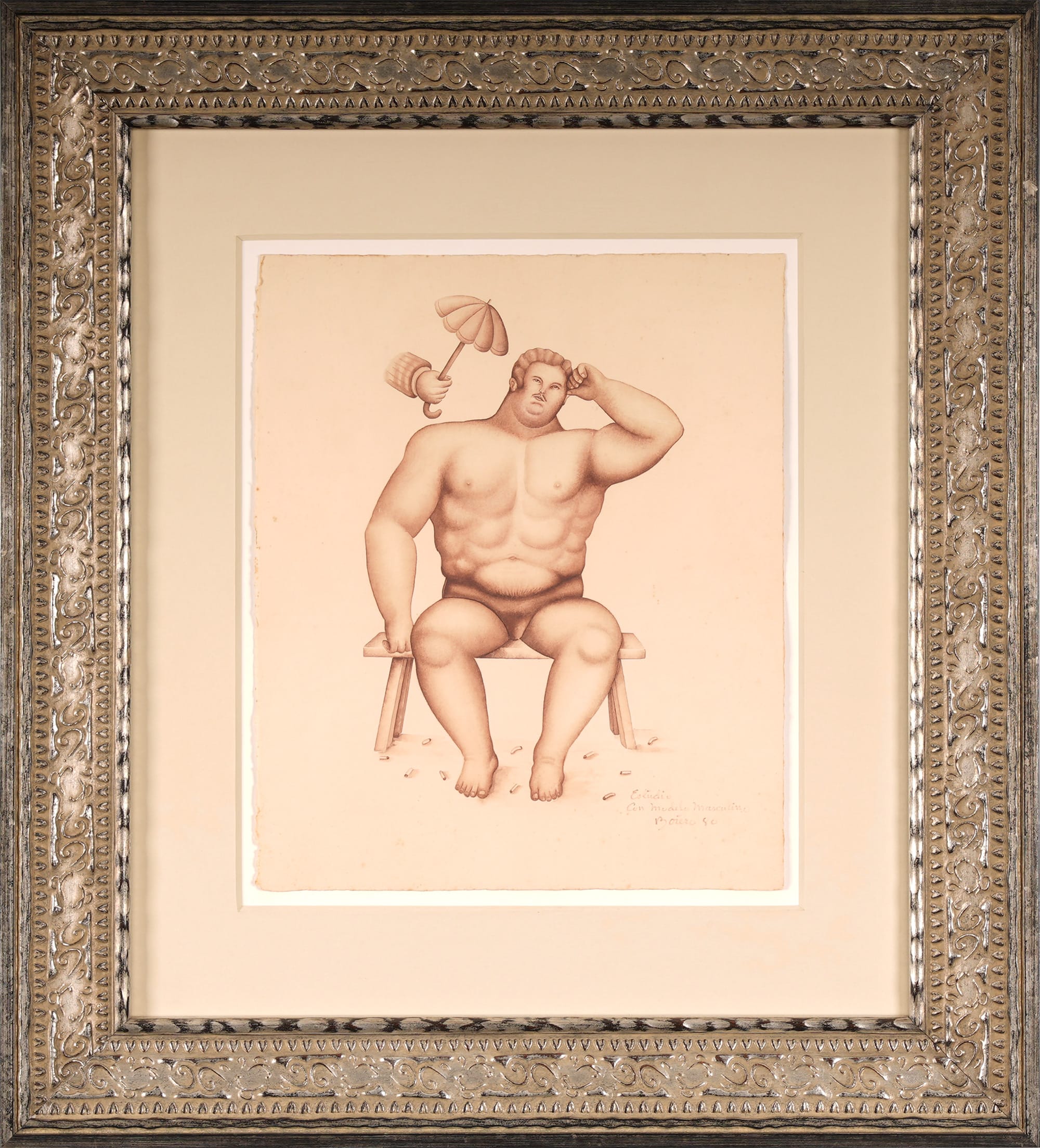
Attributed to Fernando Botero, this artwork exemplifies his signature exploration of volume and form. The male figure’s exaggerated proportions reflect Botero’s distinctive style, where monumentality meets satire. Executed in ink and sepia, the technique lends refinement and elegance, highlighting tonal variations and subtle shading that enhance the figure’s presence. Through the interplay of line and shadow, the composition achieves a balance between solidity and softness, demonstrating Botero’s remarkable mastery of form.
Fernando Botero (1932–2023) was one of the most distinctive and influential Latin American artists of the 20th and 21st centuries. Known for his unique style, often referred to as “Boterismo,” he depicted people, animals, and objects with exaggerated, rounded forms. His work, spanning painting, sculpture, and drawing, combined humor, social criticism, and a deep appreciation for traditional art. With a career that spanned over six decades, Botero created a visual language that was instantly recognizable and universally appealing.
Born in Medellín, Colombia, Botero showed an early interest in art and was influenced by the colonial churches and baroque paintings of his hometown. As a young artist, he studied in Bogotá before traveling to Europe, where he was exposed to the works of Renaissance masters such as Piero della Francesca and Diego Velázquez. This classical training would later influence his compositions, particularly in terms of form, balance, and the use of rich, vibrant colors.
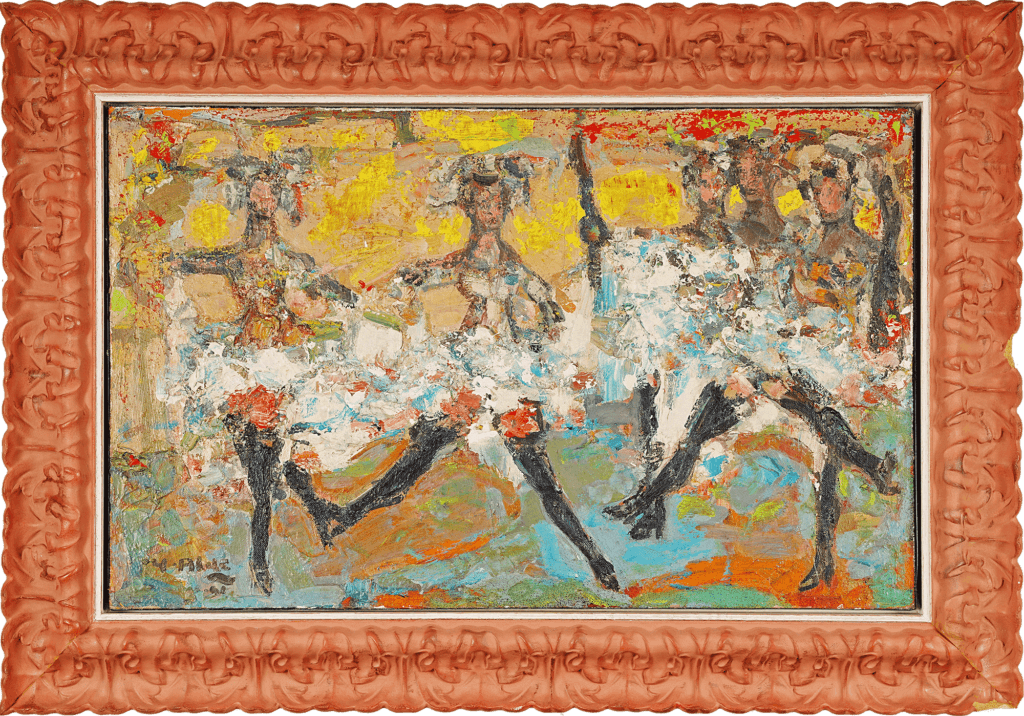
Botero’s style developed in the 1950s when he began experimenting with volume and proportions, giving his figures a monumental, inflated quality. Rather than merely depicting fatness, his exaggerated forms conveyed a sense of presence, dignity, and sometimes humor. His paintings often depicted Latin American life, from bustling street scenes to intimate portraits, always infused with warmth and satirical commentary. Works such as The Presidential Family and The Dancers blend social critique with an affectionate portrayal of everyday life.
His art also carried strong political undertones. He often commented on violence, corruption, and injustice, particularly in Colombia. One of his most powerful series, The Abu Ghraib Paintings, exposed the horrors of human rights abuses at the U.S.-run Abu Ghraib prison in Iraq. These works marked a significant departure from his typically playful and whimsical subjects, demonstrating his ability to address serious global issues through his signature style.
Sculpture became a major part of Botero’s artistic expression, with his voluminous figures taking on an even more imposing presence in three-dimensional form. His sculptures, often depicting animals, reclining figures, and musicians, can be found in major cities around the world, from Medellín to Paris and New York. Pieces like The Fat Cat and The Horse showcase his mastery of form and his ability to evoke both humor and grandeur.
Despite his fame, Botero remained deeply connected to his Latin American roots. He donated numerous works to museums in Colombia and supported cultural institutions throughout his home country. His generosity extended to the city of Medellín, where he contributed sculptures and paintings to public spaces, transforming the urban landscape.
In his later years, Botero continued to explore new themes, from still lifes to religious subjects, while maintaining his signature style. His dedication to his craft never wavered, and his work remained as relevant and beloved as ever. His legacy endures not only in the art world but also in popular culture, where his instantly recognizable figures continue to captivate audiences worldwide.
Botero’s influence on modern art is profound. By redefining form, volume, and artistic expression, he created a world that was both fantastical and deeply rooted in reality. His ability to merge beauty, satire, and social commentary ensures that his work remains timeless and universally admired.