
Description
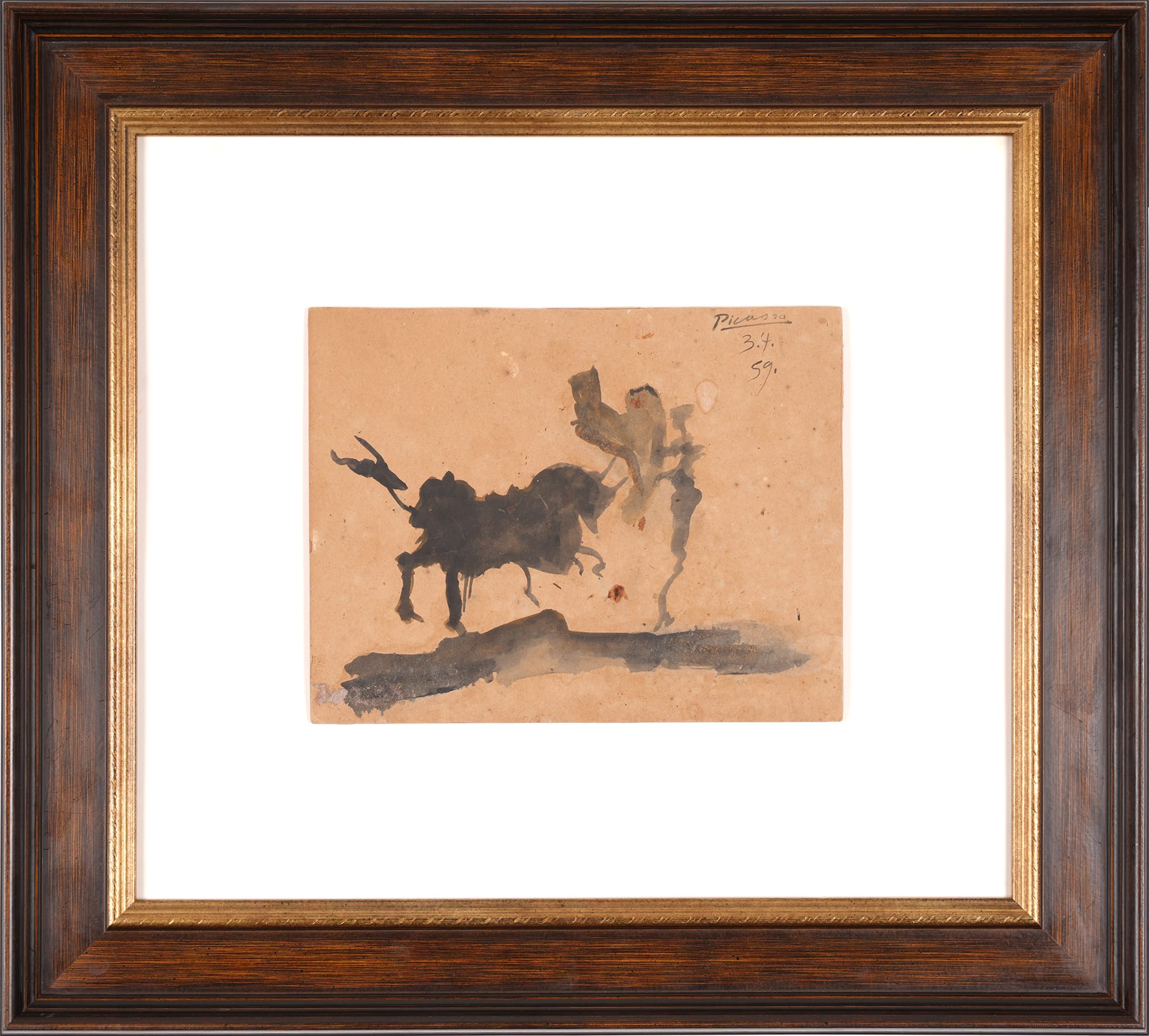
This artwork, attributed to Pablo Picasso, shows a stylized bull drawn with bold, fluid ink strokes. Each line expresses strength and energy. The black ink contrasts with raw cardboard, reflecting Picasso’s mastery of simplicity and his mythic vision of the bull.
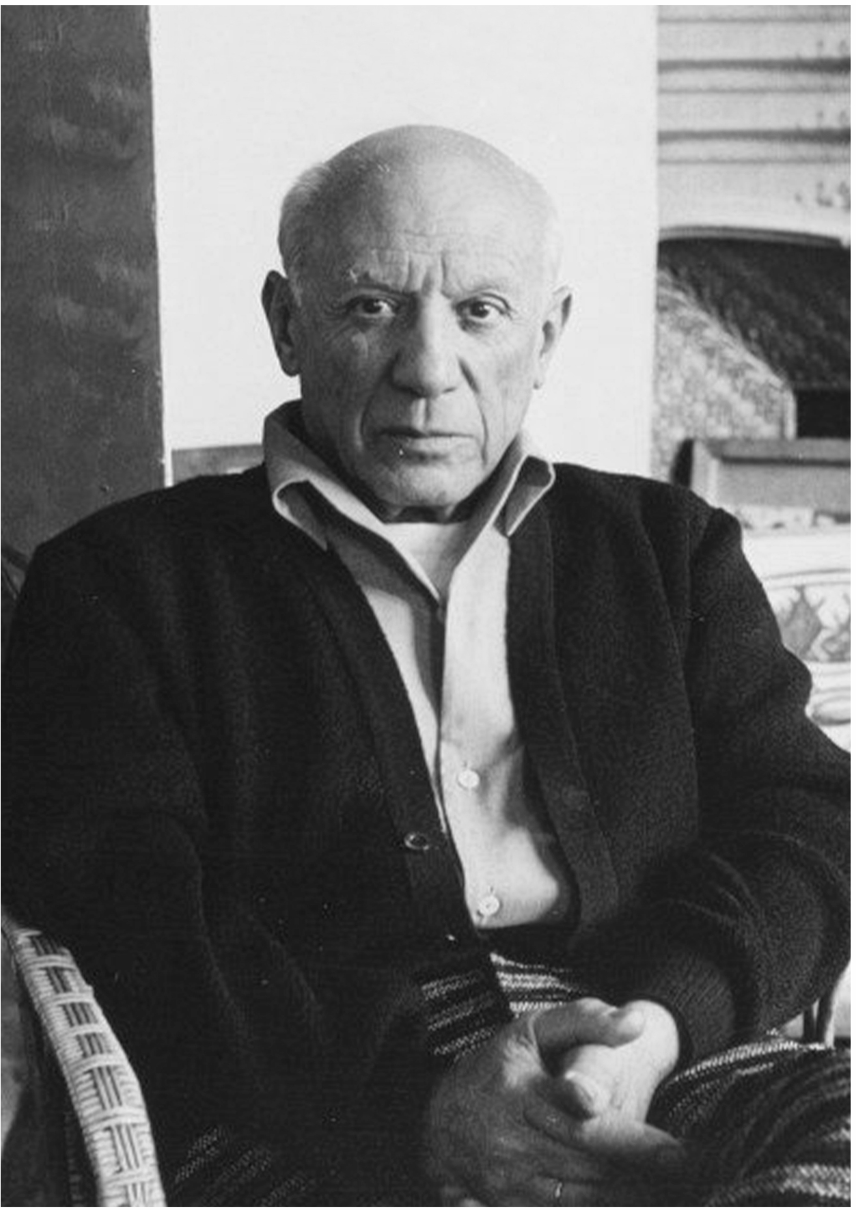
Pablo Picasso (1881–1973) remains one of the most groundbreaking and influential artists of the 20th century. His ability to reinvent artistic expression across multiple styles and movements defined modern art. From his early explorations of color and emotion to the radical deconstruction of form in Cubism, Picasso’s work transcended conventional boundaries. His innovations not only redefined painting and sculpture but also left an enduring legacy that continues to shape contemporary art.
Early Life and Education
Born in Málaga, Spain, Picasso demonstrated extraordinary artistic talent from a young age. His father, a painter and art professor, recognized his potential early on and guided his education. Picasso later moved to Barcelona and then to Paris, where he encountered a vibrant art scene that profoundly influenced his development. He studied the works of masters such as El Greco and Francisco Goya, while also engaging with modern movements like Impressionism and Symbolism. Rather than imitating existing styles, Picasso constantly sought to push the boundaries of artistic representation.
The Blue and Rose Periods
Picasso’s early works reflected deep emotional intensity.
-
Blue Period (1901–1904): He used cold, melancholic tones to explore themes of poverty, loneliness, and despair. Works like The Old Guitarist and La Vie convey a profound sense of human fragility.
-
Rose Period (1904–1906): His palette shifted to warmer hues, depicting circus performers, harlequins, and playful subjects, bringing vibrancy and poetic beauty to his art.
The Birth of Cubism
A major turning point came with Les Demoiselles d’Avignon (1907), a revolutionary painting with fragmented, angular figures and radical perspectives. Inspired by African masks and Iberian sculpture, it laid the foundation for Cubism, developed alongside Georges Braque.
-
Analytical Cubism: Focused on breaking objects into overlapping planes, as seen in Portrait of Ambroise Vollard.
-
Synthetic Cubism: Introduced brighter colors, collage, and recognizable forms, such as Still Life with Chair Caning.
Cubism shattered traditional representation and created an entirely new way of seeing.
Experimentation and Surrealism
After World War I, Picasso turned briefly to neoclassicism, producing works like Three Women at the Spring, reflecting a return to classical order. Soon after, he embraced the dreamlike distortions of Surrealism, as in The Weeping Woman, filled with expressive anguish. His artistic journey was never static—he continuously experimented with styles and techniques.
Guernica – A Political Masterpiece
Picasso’s most powerful political work is Guernica (1937), created in response to the bombing of the Spanish town during the Civil War. This massive monochromatic canvas depicts horror through fragmented figures, distorted expressions, and chaotic movement. Today, it stands as a universal anti-war symbol and one of the most iconic artworks of the 20th century.
Later Years and Legacy
In his later years, Picasso expanded his creativity beyond painting into sculpture, ceramics, and printmaking. Remaining prolific until his death in 1973, he left behind nearly 50,000 artworks. His late works, such as Self-Portrait Facing Death, reveal his enduring fascination with identity, mortality, and artistic exploration.
Picasso’s impact on modern art is immeasurable. By challenging traditional perspectives and constantly reinventing himself, he paved the way for countless movements—from Abstract Expressionism to contemporary conceptual art. His legacy endures not only in museums and galleries but also in the very foundation of modern artistic thought.