
Description
(Late 18th – Early 19th Century, Qing Dynasty)
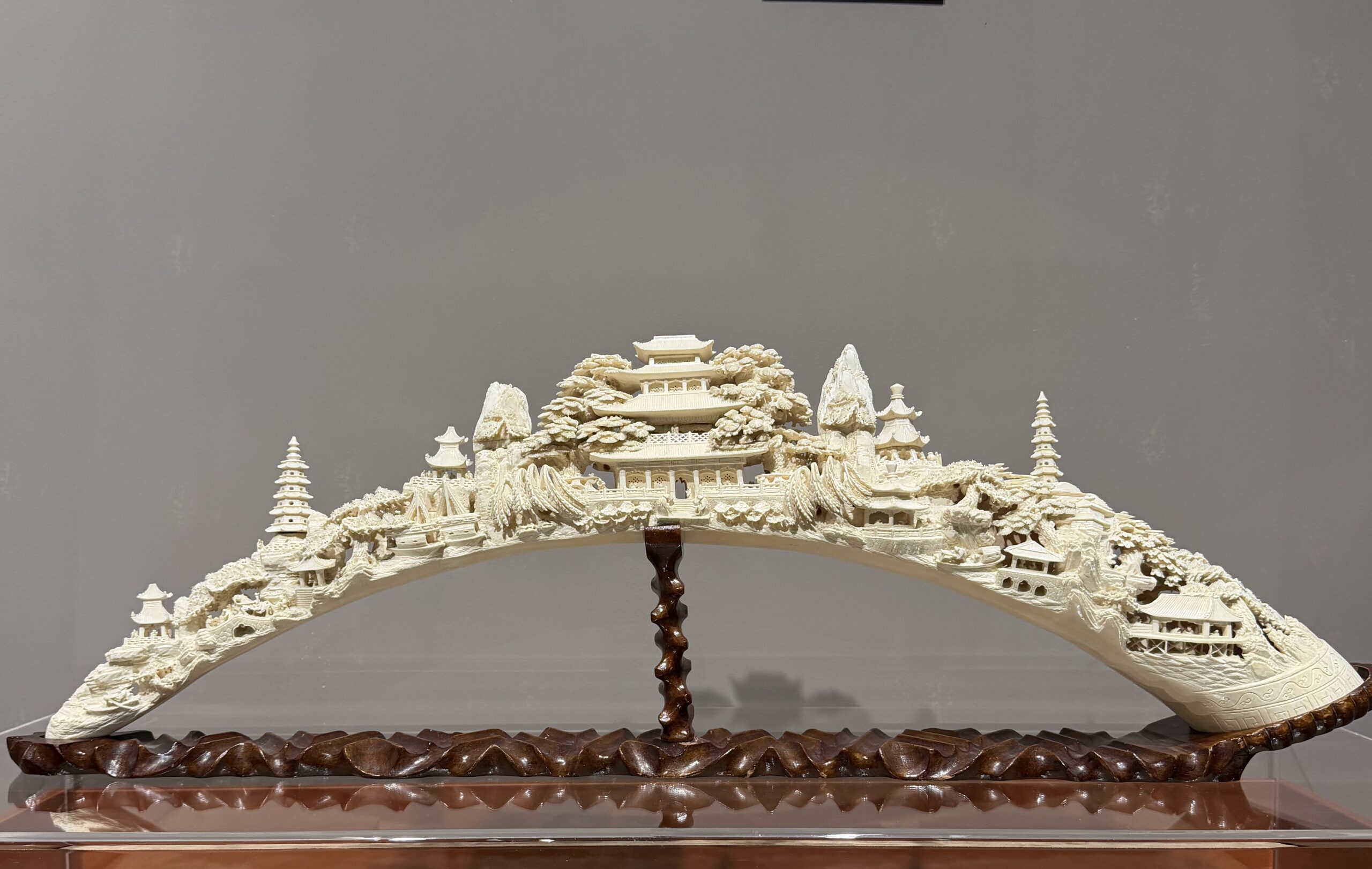
This finely carved ivory sculpture dates to the late Qing Dynasty and was executed from a single elephant tusk. It presents a continuous mountainous landscape with pagodas, bridges, pine trees, and scenes of daily life, expressing the classical Chinese ideal of harmony between nature, humanity, and spirituality.
The work demonstrates advanced openwork and layered relief techniques, refined polishing, and exceptional imperial craftsmanship. Scientific analysis confirms the material as natural elephant ivory, consistent with the late Qing period. It is proudly preserved within the Noor Royal Museum Collection.